


CHVAC (Shanghai) Machinery Co., Ltd., established in 1999, specializes in the trade of large, new, and pre-owned refrigeration units and HVAC solutions. The company’s extensive product range includes:
New and ex-stock centrifugal chilled water air conditioning units
Screw chilled water and heat pump ice-making units
Air-cooled screw cooling and heating units
Air-cooled vortex cooling and heating units
Air-cooled piston cooling and heating units
Centrifugal screw compressors
Host machine accessories


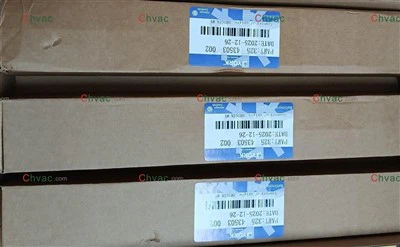

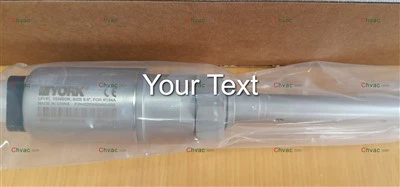
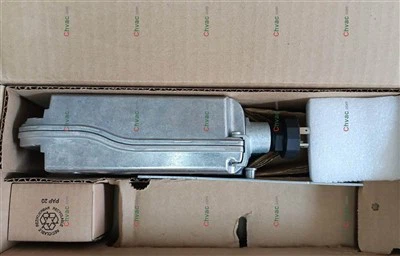
Why Choose Us?
Affordable parts
We provide parts at the lowest prices, making it economical to maintain your product and keep it running efficiently.
24/7 service centers
Our service centers operate around the clock, offering support whenever you need it, including evenings and weekends.
Rich experience
The company has long market experience and stable technical skills. The team understands project needs and offers clear solutions. Customers receive reliable support in every step.
Integrated business system
The company covers chiller sales, parts supply, and maintenance service. It manages multiple CHVAC brand companies in China and overseas. Customers get full support from one service platform.

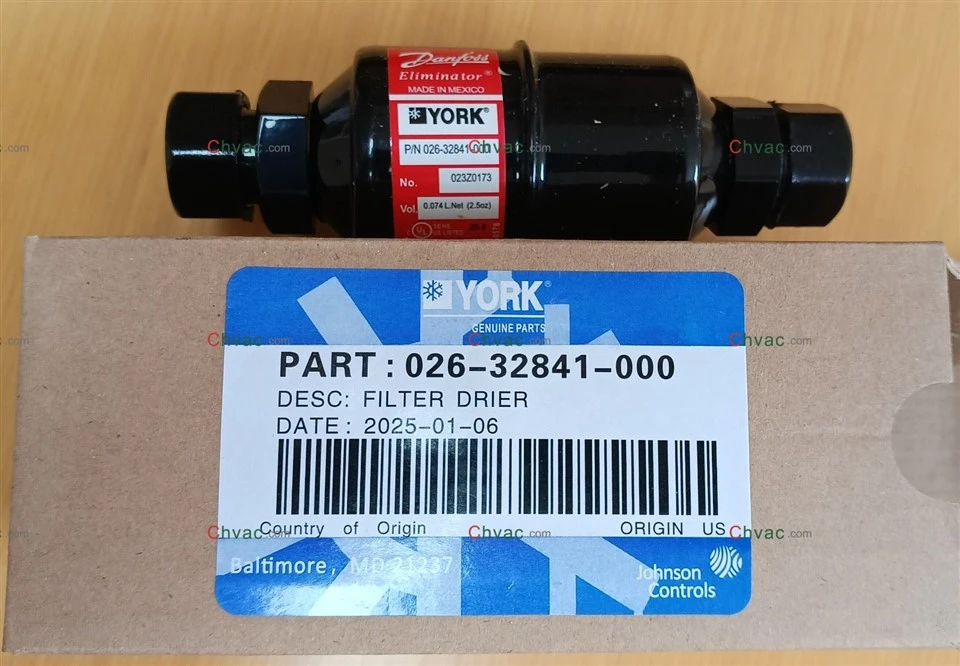
Easy maintenance :
Dry filters are easy to clean and replace, reducing downtime and maintenance costs.
High efficiency :
Dry filters can achieve high efficiency rates, capturing a wide range of particle sizes.
Low operating costs :
Dry filters do not require water or chemicals, reducing operating costs.
Flexibility :
Dry filters can be used in a variety of applications, including powder coating, woodworking, and metalworking.
Cost-effectiveness over time
While dry filters may have a higher upfront cost, their durability and low maintenance requirements make them a more economical choice in the long run.
Enhanced performance
Dry air filters optimize airflow, allowing your engine to breathe better. More airflow means better combustion, which translates to increased horsepower, smoother acceleration, and improved throttle response.
Types of York Transducer:
Classification based on principle of operation
Piezoelectric transducers: The transducers which work upon the piezoelectric effect to convert mechanical stress into an electrical signal. Piezoelectric effect is a phenomenon where certain materials such as quartz generate an electric charge in response to mechanical stress or pressure, and conversely, they deform when an electric field is applied to them. These transducers are used in sensors, actuators, and ultrasound devices.
Electromagnetic transducers: The working principle of these transducers is electromagnetic induction. These convert the changes in magnetic fields or electric currents into electrical signals or vice versa. Applications of these transducers is found in microphones, speakers, and transformers.
Thermoelectric transducers: These transducers work upon the thermoelectric effect which is the name given to the phenomenon of generation of electric voltage due to temperature gradient between two different materials. These are widely used in thermocouples to measure temperature differences.
Resistive transducers: The transducers which suffer a change in their resistance when subjected to pressure and temperature change are called as resistive transducers. Strain gauges are an example of this type of transducers which undergo a change in their electrical resistance when subjected to a mechanical stress.
Inductive transducers: These transducers undergo a change in inductance when there is a change in the physical quantity being measured. A common example of such type of transducer is a Linear Variable Differential Transformer (LVDT) which converts linear motion into an electrical signal.
Capacitive transducers: These transducers work on the principle of change in capacitance due to a change in physical quantities such as displacement, pressure, and humidity. These are used in touchscreens, proximity sensing, and pressure measurement.
Optical transducers: The transducers that convert light energy into electrical signals or vice versa are called as optical transducers. Examples are photodiodes, photovoltaic cells (solar panels), and fiber optic sensors.
Classification based on output signal type
Analog transducers:
Analog transducers produce output signals that vary continuously over time and are proportional to the input quantity being measured. Examples are Voltage output, Current output, Resistance output, and Frequency output transducers.
Digital transducers:
Digital transducers produce output signals that are discrete and quantized which are typically represented in binary format. Some examples are Binary Coded Decimal (BCD) Output, Pulse Width Modulation (PWM) Output Transducers, etc.

Classification based on direction of signal conversion
Input transducer: The transducers which convert different physical quantities into an electrical signal for further processing and manipulation are called input transducers. Examples can be found in sensors that measure temperature, pressure, light, sound, humidity, displacement, etc.
Output transducers: The transducers which take electrical signal as input and convert them into some physical actions to control or manipulate physical processes. Examples are found in actuators such as motors, valves, relays, solenoids, speakers, displays, etc.
Benefits of a Transducer:
Accurate measurement: Transducers provide highly accurate measurements of physical quantities, ensuring that operators can make informed decisions based on reliable data.
Real-time monitoring: Transducers can provide real-time monitoring of physical quantities, allowing operators to quickly detect and respond to any abnormalities or fluctuations in the system.
Easy installation: Transducers are easy to install and require minimal maintenance, making them a flexible and cost-effective solution for various industrial applications.
Versatility: Transducers can be used to measure and monitor a wide range of physical quantities, including temperature, pressure, humidity, and voltage. This versatility makes them an essential tool for many industrial applications.
Improved efficiency: By providing accurate measurements and real-time monitoring, transducers can help to improve the efficiency of industrial processes. They can detect inefficiencies or abnormalities in the system and provide data to help operators optimize processes and reduce waste.
Enhanced safety: Transducers can help to enhance safety in industrial settings by providing real-time monitoring of physical quantities. They can quickly detect any abnormalities or fluctuations that may pose a safety hazard, allowing operators to take appropriate action.
Certificate


FAQ
As one of the leading chiller parts suppliers in China, we warmly welcome you to buy discount chiller parts in stock here from our factory. All our products are with high quality and competitive price.