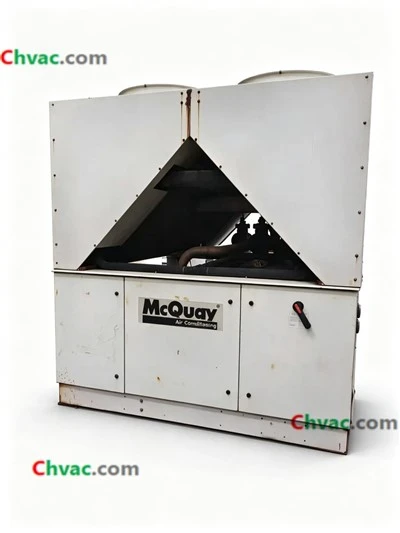
What to Check Before Buying a Used Chiller
Leave a message
What to Check Before Buying a Used Chiller: A Complete Buyer's Guide
Buying a used chiller can be a cost-effective solution for commercial buildings, industrial facilities, and HVAC projects. Compared with purchasing a brand-new unit, a used chiller may offer a lower initial investment and shorter equipment procurement time, especially when suitable models are available in stock.
However, purchasing a used industrial chiller requires careful evaluation. Equipment age, operating history, compressor condition, heat exchanger performance, and maintenance records can all affect its reliability and service life.
Whether you are looking for a used Carrier, Trane, York, McQuay, or another industrial chiller brand, understanding what to inspect before purchasing can help you avoid unnecessary risks and select equipment that meets your project requirements.
In this guide, we will explain the key factors buyers should consider before purchasing a used chiller.
1. Check the Chiller's Nameplate and Basic Specifications
The first step is to verify the chiller's identification and technical specifications. The nameplate provides essential information about the equipment and helps determine whether it is suitable for your application.
Important information to check includes:
Manufacturer and Model Number: Identify the original manufacturer and exact model to verify product specifications and compatibility.
Manufacturing Date: Understand the approximate age of the equipment.
Cooling Capacity: Confirm that the rated cooling capacity meets your project's cooling load.
Refrigerant Type: Check whether the refrigerant is compatible with your system and local environmental regulations.
Power Supply: Verify voltage, frequency, and phase requirements.
Equipment Type: Determine whether the unit is air-cooled, water-cooled, screw, centrifugal, or scroll type.
A mismatch in cooling capacity or electrical specifications may result in installation difficulties, additional modification costs, or unsuitable operating conditions.
Buyer's Tip: Always request clear photographs of the original nameplate. If the model number is unclear, ask the supplier to confirm the specifications using the manufacturer's documentation.
2. Inspect the Compressor Condition
The compressor is one of the most important components of an industrial chiller. Its condition directly affects the refrigeration cycle and overall equipment operation.
Before purchasing, pay particular attention to the following:
Operating Condition: Check whether the compressor starts and operates normally under appropriate test conditions.
Abnormal Noise and Vibration: Listen for unusual sounds and inspect for excessive vibration during operation.
Oil Condition: Review the compressor oil condition and maintenance records for signs of contamination or abnormal wear.
Electrical Condition: Inspect motor terminals, insulation condition, and electrical connections according to the manufacturer's procedures.
Operating Records: Request available compressor maintenance and operating history.
For screw chillers and centrifugal chillers, compressor inspection is especially important because major compressor repairs or replacements can involve substantial costs.
A professional technical inspection can help identify potential problems before the equipment is shipped or installed.
3. Examine the Heat Exchangers
Heat exchangers play an essential role in transferring heat within a chiller system. Their condition can significantly affect cooling performance and energy consumption.
Depending on the equipment type, buyers should inspect the evaporator, condenser, and associated heat transfer surfaces.
For water-cooled chillers:
Check the evaporator and condenser tubes for corrosion, scaling, or damage.
Inspect water-side connections and tube sheets.
Check for signs of refrigerant or water leakage.
Review available tube-cleaning and maintenance records.
For air-cooled chillers:
Inspect condenser coils for dirt accumulation, corrosion, and physical damage.
Check condenser fans and fan motors.
Examine fin condition and airflow pathways.
Verify that the fan system operates properly.
Poor heat transfer can reduce chiller efficiency and increase operating costs. Therefore, heat exchanger inspection should be included in the pre-purchase evaluation.
4. Verify the Refrigerant Type and System Condition
Refrigerant compatibility is another important consideration when buying a used chiller.
Different chiller models use different refrigerants, such as R134a, R410A, R407C, and other refrigerants depending on their design and manufacturing period.
Before purchasing, buyers should confirm:
The original refrigerant type specified by the manufacturer.
Whether the refrigerant circuit has a history of leakage.
Whether the system has been properly maintained.
Whether refrigerant-related components are in suitable condition.
Whether the refrigerant complies with regulations in the destination country.
It is also important to consider the availability and long-term regulatory status of the refrigerant.
A chiller that uses a refrigerant subject to phase-down or other restrictions may require additional planning for future operation and maintenance.
Important: Never assume that two chillers are interchangeable simply because they have similar cooling capacities. Refrigerant type, compressor design, control systems, and operating conditions must also be considered.
5. Check the Electrical and Control Systems
Modern industrial chillers rely on electrical components and control systems to maintain stable operation and protect critical equipment.
A used chiller should be checked for:
Main electrical control panels.
Compressor motor starters or variable frequency drives, where applicable.
Control boards and display interfaces.
Temperature and pressure sensors.
Safety protection devices.
Wiring connections and terminal conditions.
During inspection, verify whether the control panel powers on normally and whether the available operating parameters can be displayed.
Faulty sensors, damaged circuit boards, or outdated control systems may create additional maintenance expenses.
For older chiller models, buyers should also confirm whether compatible replacement components are still available.
6. Review Maintenance History and Operating Records
A chiller's manufacturing date alone cannot determine its actual condition.
Two chillers manufactured in the same year may have very different operating histories. One may have received regular preventive maintenance, while the other may have experienced frequent shutdowns or insufficient servicing.
Before making a purchase, request the following records whenever available:
| Document or Record | What to Verify |
|---|---|
| Maintenance History | Previous maintenance and repair activities |
| Operating Hours | Approximate accumulated operating time |
| Compressor Records | Compressor repairs and replacement history |
| Refrigerant Records | Previous refrigerant leakage or servicing |
| Inspection Reports | Technical inspection results |
| Alarm History | Previous faults and abnormal shutdowns |
These records help buyers better understand the equipment's condition and identify areas that may require additional attention.
If complete maintenance records are unavailable, arrange an independent technical inspection before finalizing the purchase.
7. Request Performance Testing Before Shipment
Visual inspection alone cannot confirm whether a used chiller can operate properly.
Whenever practical, buyers should request an operational test or performance evaluation before shipment.
A comprehensive inspection may include:
Checking the equipment's startup and shutdown sequence.
Monitoring chilled water inlet and outlet temperatures.
Checking refrigerant operating pressures.
Measuring electrical operating parameters.
Inspecting compressor operation.
Verifying safety protection functions.
Checking for abnormal noise, vibration, and leakage.
For a full-load performance test, the test conditions should be clearly documented, including cooling water temperature, chilled water temperature, flow rate, and electrical input.
These parameters should be compared with the manufacturer's specifications under equivalent operating conditions.
Not every used chiller can be tested at full load before shipment. In such cases, buyers should request the available inspection records and clarify what has and has not been tested.
8. Confirm Equipment Dimensions, Weight, and Installation Requirements
Even if a used chiller meets the required cooling capacity, it may not fit the existing mechanical room or installation area.
Before purchasing, confirm the following:
Overall equipment dimensions (L × W × H).
Total operating or shipping weight, as applicable.
Required installation clearance.
Water inlet and outlet connection sizes.
Electrical connection requirements.
Lifting points and transportation requirements.
Foundation and structural load requirements.
For replacement projects, additional attention should be given to the existing equipment footprint, piping connections, electrical infrastructure, and available installation space.
These details can help prevent unexpected installation and transportation costs.
9. Compare the Total Purchase Cost, Not Just the Equipment Price
A lower purchase price does not necessarily mean a better investment.
When comparing different used chillers, buyers should consider the total cost of ownership rather than focusing only on the initial equipment price.
| Cost Factor | What to Consider |
|---|---|
| Equipment Price | Initial purchase cost |
| Inspection Cost | Independent technical inspection, if required |
| Repair Cost | Potential replacement of worn components |
| Transportation | Packing, loading, and international shipping |
| Installation | Labor, piping, electrical work, and commissioning |
| Maintenance | Future servicing and spare parts availability |
| Energy Consumption | Expected operating costs under actual conditions |
A properly inspected used chiller with suitable specifications may provide a practical solution for projects with limited budgets or shorter equipment procurement schedules.
However, the final decision should always be based on equipment condition, operating requirements, and total project costs.
10. Check the Supplier's Warranty and After-Sales Support
Choosing a reliable supplier is just as important as selecting the right equipment.
Before placing an order, buyers should clarify:
Whether the equipment is used, refurbished, or unused surplus stock.
What inspection and testing have been completed.
Whether inspection reports and equipment photographs are available.
What warranty period is provided.
Which components are covered by the warranty.
Whether labor, transportation, and other expenses are excluded.
Whether replacement parts and technical support can be provided.
Warranty terms for used chillers can differ significantly from those for new equipment. Buyers should request written warranty conditions rather than relying on verbal assurances.
It is also worth checking whether the supplier can provide compatible spare parts for future maintenance.
Why Choose CHVAC for Used Chiller Procurement?
Finding a used chiller that matches your technical requirements, project budget, and delivery schedule can be challenging.
CHVAC (Shanghai) Machinery Co., Ltd. has specialized in refrigeration equipment and HVAC solutions since 1999, supplying new and pre-owned chillers, compressors, and related equipment for different applications.
Our product range covers major international brands, including:
Carrier
Trane
York
McQuay
Daikin
Hitachi
DUNHAM-BUSH
We support equipment sourcing for different cooling capacities and applications, including commercial buildings, industrial facilities, and large HVAC projects.
Whether you need a used centrifugal chiller, screw chiller, or air-cooled chiller, our team can help you identify suitable equipment based on your project requirements.
To help us recommend the right equipment, please provide:
Required cooling capacity (RT or kW).
Preferred brand and model, if available.
Air-cooled or water-cooled configuration.
Refrigerant requirements.
Project location and expected delivery schedule.
Our team can assist with equipment selection and available product information to help you evaluate suitable procurement options.
Frequently Asked Questions (FAQ)
1. Is buying a used chiller worth it?
Buying a used chiller can be a cost-effective option when the equipment is in good condition, has suitable technical specifications, and meets the project's operating requirements. Buyers should evaluate inspection results, maintenance history, and total ownership costs before purchasing.
2. How old is too old for a used chiller?
There is no universal age limit for all used chillers. Actual service life depends on equipment design, operating hours, maintenance quality, environmental conditions, and component condition. A professional inspection is more useful than manufacturing year alone.
3. What is the most important component to inspect in a used chiller?
The compressor is one of the most critical components to evaluate. However, the heat exchangers, refrigerant circuit, electrical system, and control components should also be inspected before purchase.
4. Can a used chiller replace an existing chiller?
Yes, provided that the replacement equipment is compatible with the existing system. Cooling capacity, water connections, electrical requirements, dimensions, refrigerant, and control arrangements should all be evaluated before replacement.
5. Should I request a test report before buying a used chiller?
Yes. An inspection or test report provides useful information about the equipment's operating condition. Buyers should request available test records and clarify whether the equipment has undergone visual inspection, operational testing, or full-load performance testing.
Contact CHVAC for Used Chiller Solutions
Looking for a reliable used industrial chiller for your next project?
CHVAC can help you source suitable equipment from leading HVAC brands based on your required cooling capacity, equipment type, and project specifications.
Contact our team today to discuss your requirements and explore available chiller procurement options.
CHVAC – Your Partner for Industrial Chillers and HVAC Equipment Solutions.