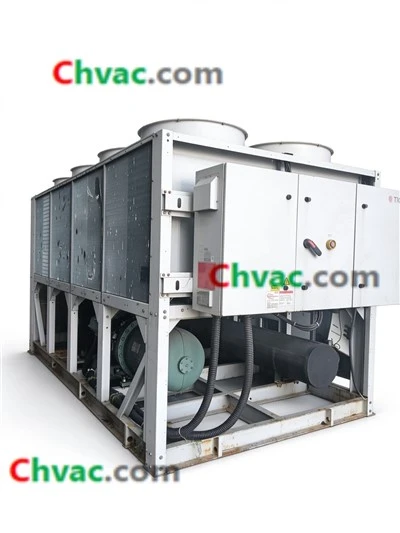
How to calculate the cooling load for a chiller?
Leave a message

Calculating the cooling load for a chiller is a crucial step in ensuring the efficient operation of any cooling system. As a chiller supplier, I've seen firsthand the importance of accurate cooling load calculations. In this blog, I'll guide you through the process of calculating the cooling load for a chiller, providing you with the knowledge and tools to make informed decisions for your cooling needs.
Understanding the Basics of Cooling Load
Before we dive into the calculations, it's essential to understand what cooling load is. Cooling load refers to the amount of heat that needs to be removed from a space to maintain a comfortable temperature and humidity level. It includes both sensible heat (the heat you can feel) and latent heat (the heat associated with moisture in the air).
The cooling load of a space is influenced by several factors, including:
- Occupancy: The number of people in a space generates heat through body heat and respiration.
- Equipment and Appliances: Electronic devices, lighting, and other equipment produce heat as they operate.
- Solar Radiation: Sunlight entering through windows can significantly increase the heat load in a space.
- Ventilation: The amount of fresh air brought into a space affects the cooling load, as it may need to be cooled and dehumidified.
- Building Envelope: The insulation, windows, and doors of a building can either reduce or increase the heat transfer between the interior and exterior.
Step 1: Determine the Space's Dimensions
The first step in calculating the cooling load is to measure the dimensions of the space you want to cool. This includes the length, width, and height of the room. These measurements will help you calculate the volume of the space, which is essential for determining the amount of air that needs to be cooled.
For example, if you have a rectangular room that is 10 meters long, 8 meters wide, and 3 meters high, the volume of the room would be:
[Volume = Length \times Width \times Height = 10m \times 8m \times 3m = 240m^3]
Step 2: Calculate the Sensible Heat Load
The sensible heat load is the amount of heat that needs to be removed to lower the temperature of the air in a space. It can be calculated using the following formula:
[Q_s = m \times c_p \times \Delta T]
Where:
- (Q_s) is the sensible heat load (in watts)
- (m) is the mass flow rate of air (in kg/s)
- (c_p) is the specific heat capacity of air (approximately 1005 J/kg°C)
- (\Delta T) is the temperature difference between the indoor and outdoor air (in °C)
To calculate the mass flow rate of air, you can use the following formula:
[m = \rho \times V]
Where:
- (\rho) is the density of air (approximately 1.2 kg/m³ at standard conditions)
- (V) is the volume flow rate of air (in m³/s)
The volume flow rate of air can be determined based on the ventilation requirements of the space. For example, a typical office space may require a ventilation rate of 0.1 m³/s per person.
Let's assume that the room we calculated earlier has a ventilation rate of 0.1 m³/s per person, and there are 10 people in the room. The volume flow rate of air would be:
[V = 0.1m^3/s/person \times 10 people = 1m^3/s]
The mass flow rate of air would be:
[m = \rho \times V = 1.2kg/m^3 \times 1m^3/s = 1.2kg/s]
Let's also assume that the temperature difference between the indoor and outdoor air is 10°C. The sensible heat load would be:
[Q_s = m \times c_p \times \Delta T = 1.2kg/s \times 1005J/kg°C \times 10°C = 12060W]
Step 3: Calculate the Latent Heat Load
The latent heat load is the amount of heat that needs to be removed to remove the moisture from the air in a space. It can be calculated using the following formula:
[Q_l = m \times h_{fg} \times \Delta W]
Where:
- (Q_l) is the latent heat load (in watts)
- (m) is the mass flow rate of air (in kg/s)
- (h_{fg}) is the latent heat of vaporization of water (approximately 2500 kJ/kg)
- (\Delta W) is the difference in humidity ratio between the indoor and outdoor air (in kg/kg)
The humidity ratio is the mass of water vapor per unit mass of dry air. It can be determined using a psychrometric chart or a humidity calculator.
Let's assume that the difference in humidity ratio between the indoor and outdoor air is 0.005 kg/kg. The latent heat load would be:
[Q_l = m \times h_{fg} \times \Delta W = 1.2kg/s \times 2500000J/kg \times 0.005kg/kg = 15000W]
Step 4: Calculate the Total Cooling Load
The total cooling load is the sum of the sensible heat load and the latent heat load. In our example, the total cooling load would be:
[Q_{total} = Q_s + Q_l = 12060W + 15000W = 27060W]
Step 5: Consider Additional Factors
In addition to the sensible and latent heat loads, there are several other factors that may need to be considered when calculating the cooling load. These include:
- Solar Heat Gain: The amount of heat that enters a space through windows can be significant, especially in buildings with large windows or in sunny climates. You can use shading devices, such as blinds or curtains, to reduce solar heat gain.
- Equipment Heat Load: Electronic devices, lighting, and other equipment can generate a significant amount of heat. Make sure to include the heat output of all equipment in your calculations.
- Infiltration: Air leakage through cracks and gaps in the building envelope can increase the cooling load. You can reduce infiltration by sealing air leaks and improving the insulation of your building.
Step 6: Select the Right Chiller
Once you have calculated the total cooling load, you can select the right chiller for your needs. When choosing a chiller, it's important to consider the following factors:


- Capacity: The chiller's capacity should be sufficient to meet the cooling load of your space. Make sure to choose a chiller with a capacity that is slightly larger than your calculated cooling load to account for any future growth or changes in your cooling needs.
- Efficiency: Look for a chiller that is energy-efficient to reduce your operating costs. The efficiency of a chiller is typically measured by its coefficient of performance (COP), which is the ratio of the cooling output to the energy input.
- Reliability: Choose a chiller from a reputable manufacturer with a proven track record of reliability. This will help ensure that your chiller operates smoothly and requires minimal maintenance.
As a chiller supplier, we offer a wide range of chillers to meet your specific needs. Some of our popular models include the Carrier Centrifugal Chiller, Expansion Valve For Carrier 32GB404534, and Trane CVHG780 Centrifugal Water Cooled Chiller.
Conclusion
Calculating the cooling load for a chiller is a complex process that requires careful consideration of several factors. By following the steps outlined in this blog, you can accurately calculate the cooling load of your space and select the right chiller for your needs.
If you have any questions or need assistance with calculating the cooling load for your chiller, please don't hesitate to contact us. We're here to help you make the right decision for your cooling needs.
References
- ASHRAE Handbook - Fundamentals. American Society of Heating, Refrigerating and Air-Conditioning Engineers (ASHRAE).
- Cooling Load Calculation Manual. Carrier Corporation.
- Psychrometrics for HVAC Engineers. Trane Company.