How to maintain the water quality in a discount chiller?
Leave a message

If you're running a commercial space, industrial facility, or even a large-scale office building, a discount chiller is a total workhorse for keeping things cool without breaking the bank. But here's the thing: even the best used or discount chillers will crap out early if you don't nail down water quality maintenance. Over the years, I've seen so many folks skip this step, only to end up with clogged tubes, corroded components, or a unit that's blowing warm air when they need it most. Today, I'm breaking down how to keep your discount chiller's water clean, efficient, and running for years-no fancy lab gear required.
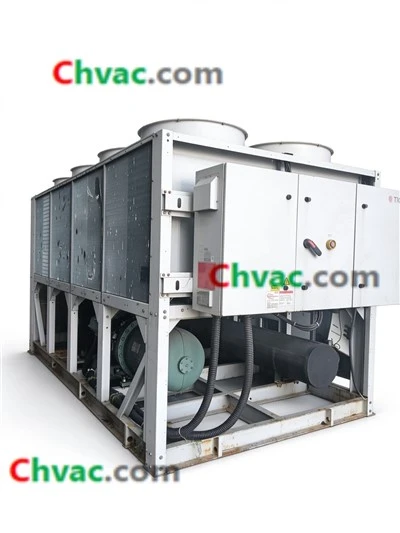
First, let's get why water quality matters for discount chillers. Unlike brand-new units that come with pre-treated, perfectly balanced water, discount chillers (whether they're TICA 133RT/141RT Air Cooled Screw Chiller Heat Pump Unit TASD140.1CH3 (Used) in Stock, 500 TR Trane Centrifugal CVHF485 Water Cooled Chiller, or any other pre-owned model) run on circulating water that does two key jobs: absorbs heat from your space, and carries that heat away to be rejected. If that water's full of gunk, it acts like an insulator-so your chiller has to work way harder to cool things down, killing efficiency and jacking up energy bills. Worse, sediment, scale, and bacteria can corrode metal parts (hello, expensive repairs) or clog tiny tubes, leading to premature unit failure. I've had customers come to us with a discount chiller that's 5 years old and already done because they never checked their water-don't be that person.
Start with the basics: test your water regularly. I'm talking weekly checks when the chiller's running nonstop (like in summer) and at least once a month when it's idle (winter, for most places). You don't need to be a water treatment expert here-just grab a cheap test kit from your local hardware store or industrial supply shop, and track four key metrics: pH level, total dissolved solids (TDS), hardness, and bacteria count. Most discount chillers (especially water-cooled ones) want a pH between 7.8 and 8.5-too low and you get corrosion, too high and scale builds up. TDS should stay under 1,000 ppm; anything higher means you've got too much dissolved junk (like minerals or debris) floating around. Hardness (measured as calcium carbonate) needs to be under 200 ppm to prevent scale, which is that crusty buildup that sticks to tubes like bacon grease on a pan. And for bacteria? A quick swab test once a quarter to make sure you don't have legionella or other nasty stuff growing-especially if your chiller's in a space with high foot traffic, like a restaurant or office.
Next up: flush and clean the system regularly. Over time, even with testing, sediment and scale will build up in the chiller's tubes, pipes, and heat exchangers. For discount chillers like Carrier 30XW1261 Water-cooled Chiller or Hitachi RCUA280WHZ Water Cooled Chiller, I recommend a full flush once a year for smaller units, and twice a year for larger ones (100 TR and up). But wait-don't just turn on the tap and blast water through. Use a chemical flush made specifically for chillers to break down scale and remove biofilm. Biofilm is that slimy, sticky layer of bacteria and debris that's way harder to get rid of with just a water flush. Once you've flushed, run a mild acid cleaner (following the manufacturer's instructions-every chiller's different) to dissolve any remaining scale, then do a final rinse until the water runs clear. Skipping this step? Your chiller's efficiency can drop by 15-20% fast, and you'll be replacing parts before you know it.
Then, use the right water treatment chemicals. This isn't a "set it and forget it" thing-you can't just dump random bleach in there. For discount chillers, stick to a balanced mix of scale inhibitors, corrosion inhibitors, and biocides. Scale inhibitors stop those minerals from sticking to tubes, corrosion inhibitors protect metal parts (even in used units, which might have minor wear), and biocides keep bacteria and algae from growing. A pro tip: if you're on a budget (which is why you went with a discount chiller in the first place), look for concentrated treatments that you dilute yourself-way cheaper than pre-mixed stuff. But don't skimp here-cheap chemicals can actually cause more harm than good, like eating away at your chiller's pipes. I've seen a customer use a $20 biocide instead of the $80 one I recommended, and within 6 months, their discount chiller had a pinhole leak in the heat exchanger that cost $1,200 to fix. Ouch. Also, for air-cooled discount chillers like York 224RT/ 226RT Screw Air-Cooled Heat Pump Chiller YEAS225RC50B (Used) in Stock, you still need to treat the water-even though it doesn't have a closed cooling tower, the circulating water still picks up dust and debris from the air, so it's not "closed off" and clean.
Don't forget to maintain the cooling tower (if you have one). A lot of people with water-cooled discount chillers ignore their cooling towers, but that's a huge mistake. The cooling tower is where the water gets cooled, so if it's dirty, your whole system suffers. Clean the tower's fill material (the plastic or metal bits that help cool the water) once a season, remove any debris (leaves, bugs, dirt) from the basin, and check the tower's drift eliminators to make sure they're not letting water escape. Also, make sure the tower's water level is correct-too low and you'll pump air into the chiller's lines, leading to cavitation (which is like tiny explosions inside the pipes, corroding them fast), too high and you'll get overflow and wasted water. I've seen a cooling tower so full of leaves that it caused a discount chiller to overheat and shut down on a 90-degree day-total nightmare for a business that can't afford to lose cool air.
Track and adjust as needed. Every chiller's environment is different. If your discount chiller's in a coastal area, for example, the air has more salt, so your water will need a corrosion inhibitor that's extra tough against salt. If it's in an industrial area with lots of dust, you might need to flush more often. Keep a log of your water tests, flushes, and chemical treatments-even a simple notebook works. This way, you'll spot trends: if your TDS is always high in summer, you might need to drain and top off the system more regularly (that's called "blowdown," by the way-removing some of the high-TDS water and replacing it with fresh, treated water). Logs also help if you ever need to troubleshoot a problem-instead of guessing what's wrong, you can go back and see when your last test was, or if a chemical was skipped.
Now, let's talk common mistakes I see with discount chillers specifically. A lot of people think "it's used, so I don't need to do as much maintenance"-nope, that's backwards. Used chillers might have small wear spots on metal parts, so good water quality is even more important to prevent corrosion from getting worse. Another mistake is topping off the system with tap water only-tap water has high minerals, which cause scale. Always top off with deionized or distilled water, mixed with your treatment chemicals. And don't ignore air bubbles in the lines-air can cause corrosion and reduce efficiency, so check the air vents on the chiller regularly to bleed out any trapped air.
Here's the thing: a discount chiller is a smart investment, but only if you take care of it. Good water quality maintenance isn't just about avoiding repairs-it's about keeping your energy bills low, your chiller running reliably, and getting the most life out of your unit. If you've got questions about your specific discount chiller (whether it's a TICA, Trane, Carrier, Hitachi, or York model), our team's here to help. We can walk you through water testing, recommend the right treatments, or even help with professional flushes if you don't want to do it yourself. Don't wait until your chiller starts acting up-reach out to us to chat about your chiller's needs and how to keep your water clean.
References
- ASHRAE Handbook: HVAC Systems and Equipment. American Society of Heating, Refrigerating and Air-Conditioning Engineers, 2020.
- Water Treatment for Commercial Chiller Systems. Cooling Technology Institute, 2019.
- Guide to Maintaining Used Industrial Chillers. International Association of Refrigeration, 2021.
- Corrosion and Scale Prevention in Closed-Loop Cooling Systems. NACE International, 2018.