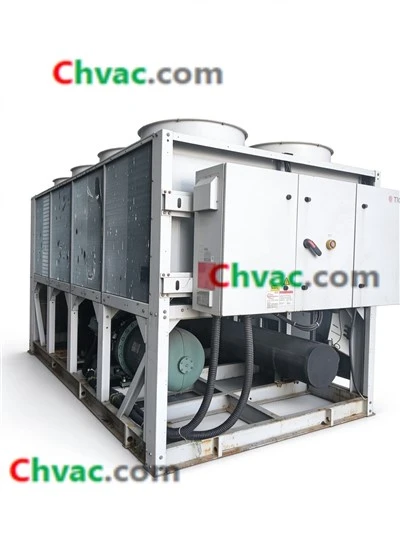
How to monitor the operation of York YK Chiller?
Leave a message

Hey there! As a supplier of York YK Chillers, I've had my fair share of experiences with these bad boys. In this blog, I'm gonna share with you how to monitor the operation of York YK Chillers. Whether you're a newbie in the HVAC world or a seasoned pro, this info'll come in handy.
Understanding the Basics of York YK Chillers
First things first, let's talk a bit about what makes York YK Chillers so special. These chillers are known for their efficiency, reliability, and advanced technology. They're used in a wide range of applications, from commercial buildings to industrial facilities. The York YK Chiller uses a centrifugal compressor, which is designed to provide high - performance cooling with low energy consumption.
The chiller has a bunch of components that work together to keep things cool. There's the compressor, condenser, evaporator, and expansion valve. Each of these parts plays a crucial role in the refrigeration cycle. The compressor compresses the refrigerant gas, raising its temperature and pressure. The hot, high - pressure gas then flows to the condenser, where it releases heat and turns back into a liquid. The liquid refrigerant then passes through the expansion valve, which reduces its pressure and temperature. Finally, it enters the evaporator, where it absorbs heat from the water or air being cooled.


Monitoring the Compressor
The compressor is the heart of the York YK Chiller, so it's super important to keep an eye on it. One of the key things to monitor is the compressor's motor current. You can use a clamp - on ammeter to measure the current. If the current is too high, it could mean that the compressor is overloaded, which could lead to motor failure. On the other hand, if the current is too low, it might indicate a problem with the refrigerant charge or a mechanical issue.
Another thing to watch is the compressor's discharge pressure and suction pressure. The discharge pressure should be within the manufacturer's recommended range. If it's too high, it could be due to a dirty condenser, a restricted refrigerant flow, or an overcharge of refrigerant. A low discharge pressure might be caused by a refrigerant leak or a problem with the compressor's internal components.
The suction pressure also needs to be monitored. A low suction pressure could mean that the evaporator is not getting enough refrigerant, which could be due to a clogged filter or a malfunctioning expansion valve. A high suction pressure might indicate an overcharge of refrigerant or a problem with the compressor's capacity control.
Checking the Condenser
The condenser is responsible for removing heat from the refrigerant. A dirty or blocked condenser can cause the chiller to operate inefficiently and even lead to system failure. To monitor the condenser, you should check the condenser water temperature and flow rate. The water temperature should be within the specified range. If it's too high, it could mean that the condenser is not cooling the refrigerant effectively.
You also need to look at the condenser coils for any signs of dirt, debris, or corrosion. A buildup of dirt on the coils can reduce the heat transfer efficiency. You can use a pressure washer or a soft brush to clean the coils if necessary. Additionally, check the condenser fan motor to make sure it's running properly. A faulty fan motor can cause poor air circulation over the condenser coils.
Evaluating the Evaporator
The evaporator is where the refrigerant absorbs heat from the water or air being cooled. To monitor the evaporator, you should measure the chilled water temperature and flow rate. The chilled water temperature should be maintained at the desired setpoint. If it's too high, it could mean that the evaporator is not absorbing enough heat, which could be due to a low refrigerant charge or a problem with the water flow.
Check the evaporator coils for any signs of frost or ice buildup. Frost or ice on the coils can reduce the heat transfer efficiency and cause the chiller to operate inefficiently. This could be caused by a low refrigerant charge, a dirty air filter (if it's an air - cooled evaporator), or a problem with the evaporator fan.
Monitoring the Expansion Valve
The expansion valve controls the flow of refrigerant into the evaporator. A malfunctioning expansion valve can cause problems with the chiller's performance. To monitor the expansion valve, you should check the superheat. Superheat is the difference between the refrigerant's actual temperature at the evaporator outlet and its saturation temperature at the evaporator pressure.
The superheat should be within the manufacturer's recommended range. If the superheat is too high, it could mean that the expansion valve is not allowing enough refrigerant to enter the evaporator. If the superheat is too low, it might indicate that the expansion valve is allowing too much refrigerant to enter the evaporator.
Using the Chiller's Control System
Most York YK Chillers come with a sophisticated control system that allows you to monitor and control various aspects of the chiller's operation. The control system can display real - time data such as temperature, pressure, and motor current. It can also provide diagnostic information and alerts if there's a problem with the chiller.
You can use the control system to set the desired operating parameters, such as the chilled water temperature setpoint and the compressor's capacity control. Make sure to regularly review the control system's logs to look for any trends or anomalies in the chiller's operation.
Importance of Regular Maintenance
Regular maintenance is crucial for the proper operation of York YK Chillers. In addition to monitoring the chiller's operation, you should also schedule regular maintenance checks. This includes tasks such as changing the filters, lubricating the moving parts, and checking the electrical connections.
A well - maintained chiller will not only operate more efficiently but also have a longer lifespan. It can also help you avoid costly repairs and downtime.
Conclusion
Monitoring the operation of York YK Chillers is essential for ensuring their efficient and reliable performance. By keeping an eye on the compressor, condenser, evaporator, expansion valve, and using the chiller's control system, you can catch potential problems early and take corrective action.
If you're in the market for a new chiller, we've got some great options available. Check out our York RWK 422kw CHVAC NEW, 550TR YORK YK CHILLER CHVAC 2025 NEW WATER COOLED CHILLER, and York YEWS100SA50D1 Water CooledChiller.
If you have any questions or are interested in purchasing a York YK Chiller, don't hesitate to reach out for a procurement discussion. We're here to help you find the best chiller solution for your needs.
References
- York YK Chiller Operation and Maintenance Manual
- HVAC Systems Design and Installation Guidelines