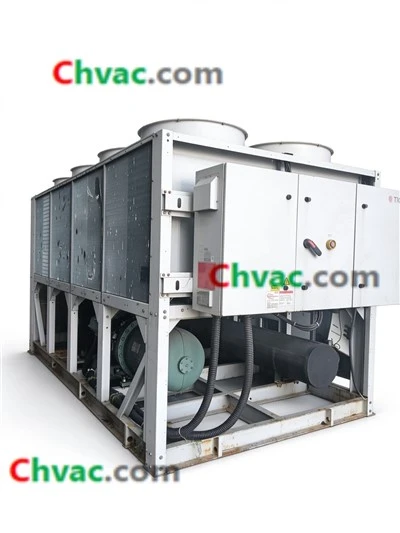
Is the refrigerant in the chiller for sale environmentally friendly?
Leave a message

Hey there! As a supplier of chillers for sale, I often get asked about the environmental friendliness of the refrigerants used in our chillers. It's a hot topic these days, and for good reason. With the growing concern about climate change and environmental protection, everyone wants to know if the products they're buying are doing their part to keep our planet healthy. So, let's dive into this question and see what we can find out.
First off, what exactly is a refrigerant? Well, in simple terms, a refrigerant is a substance used in the cooling cycle of a chiller to absorb and release heat. It's what makes your chiller work, allowing it to cool down water or air and provide that much - needed comfort in commercial and industrial settings.
Now, not all refrigerants are created equal when it comes to the environment. There are a few key factors we need to consider when evaluating their environmental friendliness:
Ozone Depletion Potential (ODP)
The ODP measures how much a refrigerant can damage the ozone layer. Chlorofluorocarbons (CFCs) and hydrochlorofluorocarbons (HCFCs) have high ODPs. These were commonly used in older chillers, but due to their harmful effects on the ozone layer, they've been phased out under the Montreal Protocol. Most modern chillers no longer use these substances.
Global Warming Potential (GWP)
GWP is a measure of how much heat a greenhouse gas traps in the atmosphere over a specific period compared to carbon dioxide. High - GWP refrigerants can contribute significantly to global warming. For example, hydrofluorocarbons (HFCs) have relatively high GWPs, although they don't deplete the ozone layer.
Energy Efficiency
A refrigerant's performance also affects its environmental impact. A more energy - efficient refrigerant means the chiller uses less electricity to operate. This not only saves money on energy bills but also reduces the overall carbon footprint, as less power generation means fewer greenhouse gas emissions.
At our company, we're committed to offering chillers with environmentally friendly refrigerants. We understand the importance of being part of the solution to environmental problems. That's why we've made sure to stock a wide range of chillers that use the latest, eco - friendly refrigerants.
Let's take a look at some of the chillers we have for sale and the refrigerants they use:
- 1242TR 4368 KW CVHF1300 NEW Trane Water Cooled Chiller CHVAC NEW 2025: This Trane chiller uses a refrigerant with a low GWP. It's designed to be highly energy - efficient, which means it can cool large spaces effectively while keeping energy consumption in check. The low - GWP refrigerant ensures that it has a minimal impact on global warming.
- 430 TR Carrier 30XW1502 Water Cooled Chiller: The Carrier chiller is another great option. It utilizes a refrigerant that has been carefully selected for its environmental performance. With a focus on energy efficiency, this chiller can provide reliable cooling while being kind to the environment.
- York YEWS100SA50D1 Water CooledChiller: York's chiller is equipped with a refrigerant that meets the latest environmental standards. It has a low ODP and GWP, making it a great choice for those who want to reduce their environmental impact without sacrificing performance.
One of the newer types of refrigerants we're seeing more of is hydrofluoroolefins (HFOs). HFOs have very low GWPs and zero ODP. They're a step forward in the quest for more environmentally friendly refrigerants. Some of our chillers are now using HFO - based refrigerants, which offer a great balance between performance and environmental friendliness.
But it's not just about the refrigerant itself. The design and operation of the chiller also play a crucial role. Our chillers are engineered to maximize the efficiency of the refrigerant. For example, they have advanced control systems that can adjust the cooling capacity based on the actual demand. This means the chiller doesn't waste energy by running at full capacity when it's not needed.
Another aspect is proper maintenance. A well - maintained chiller will use its refrigerant more efficiently. We offer maintenance services to ensure that our chillers are always in top - notch condition. Regular maintenance includes checking for refrigerant leaks, cleaning components, and calibrating the control systems. Leaks not only waste refrigerant but can also release harmful substances into the atmosphere, so it's essential to keep an eye on this.


So, to answer the question "Is the refrigerant in the chiller for sale environmentally friendly?", the answer is a resounding yes. We've made sure to source and offer chillers that use refrigerants with low ODPs and GWPs, and that are energy - efficient. We're constantly looking for ways to improve and stay ahead of the curve when it comes to environmental protection.
If you're in the market for a chiller, whether it's for a new construction project, an upgrade to an existing system, or just a replacement, we're here to help. Our team of experts can guide you through the selection process, taking into account your specific needs, budget, and environmental concerns. We'll make sure you get a chiller that not only performs well but also does its part to protect our planet.
Don't hesitate to reach out if you have any questions or if you want to learn more about our chillers and the refrigerants they use. We're always happy to have a chat and help you make the best decision for your business.
References
- "Montreal Protocol on Substances that Deplete the Ozone Layer." United Nations Environment Programme.
- "Global Warming Potentials." Intergovernmental Panel on Climate Change (IPCC).
- Manufacturer's specifications for Trane, Carrier, and York chillers.