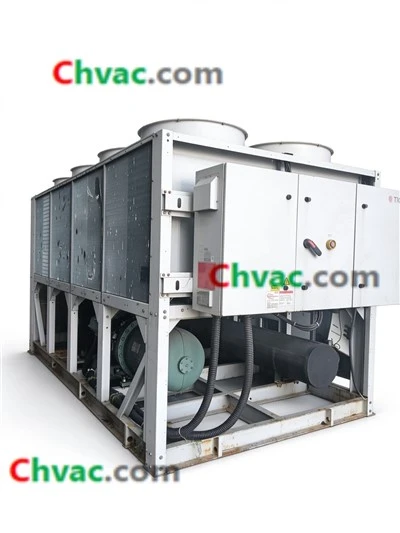
Can the Trane Centrifugal Chiller be integrated with other building systems?
Leave a message

As a supplier of Trane Centrifugal Chillers, I am frequently asked about the integration capabilities of these advanced cooling systems with other building systems. This blog post aims to delve into this topic, exploring the possibilities, benefits, and challenges of integrating Trane Centrifugal Chillers with various building subsystems.
Understanding Trane Centrifugal Chillers
Trane Centrifugal Chillers are renowned for their high efficiency, reliability, and performance. They are designed to provide large - scale cooling for commercial and industrial buildings, using centrifugal compression technology to remove heat from the building's environment. These chillers offer precise temperature control, energy savings, and reduced maintenance requirements.
Integration with HVAC Systems
One of the most common integrations is with the overall Heating, Ventilation, and Air - Conditioning (HVAC) system. Trane Centrifugal Chillers can be seamlessly incorporated into existing HVAC setups. For example, they can work in tandem with air handling units (AHUs). The chiller provides chilled water, which is then circulated through the AHUs to cool and dehumidify the incoming air. This integration allows for a coordinated operation, optimizing the overall efficiency of the HVAC system.
Trane's advanced control systems enable real - time communication between the chiller and other HVAC components. This ensures that the chiller adjusts its operation based on the actual cooling demand of the building. For instance, if the occupancy of a building increases, the AHUs will sense the change in temperature and humidity, and the chiller can then ramp up its cooling capacity accordingly. This level of integration not only improves comfort but also reduces energy consumption.


Integration with Building Automation Systems (BAS)
Building Automation Systems are designed to centralize the control and monitoring of various building functions. Trane Centrifugal Chillers can be easily integrated with BAS platforms. Through open communication protocols such as BACnet or Modbus, the chiller can share data with the BAS. This includes information such as chiller performance parameters (like cooling capacity, energy consumption), status (operating, idle, fault), and sensor readings (temperature, pressure).
The BAS can use this data to make informed decisions about the overall building operation. For example, it can schedule the chiller to operate during off - peak hours when electricity rates are lower, or it can detect a fault in the chiller and immediately alert the maintenance staff. This integration enhances the building's operational efficiency and reduces downtime.
Integration with Water Systems
Trane Centrifugal Chillers are water - cooled systems, which means they rely on a water loop for heat rejection. They can be integrated with the building's water supply and drainage systems. The chiller requires a continuous supply of clean water for its operation. It can be connected to the building's municipal water supply or a dedicated water storage tank.
Moreover, the chiller can be integrated with a water treatment system. This is crucial to prevent the formation of scale, corrosion, and biological growth in the chiller's heat exchangers. A water treatment system can maintain the water quality within the optimal range, ensuring the long - term performance and reliability of the chiller.
Compatibility with Renewable Energy Systems
In today's era of sustainable building design, the integration of Trane Centrifugal Chillers with renewable energy systems is an exciting prospect. For example, the chiller can be paired with a solar thermal system. The solar thermal collectors can pre - heat the water used in the chiller's condenser loop, reducing the energy required for the chiller to operate.
Another possibility is the integration with a geothermal system. Geothermal energy can be used to provide a stable source of heat or cold for the chiller, depending on the season. This combination can significantly reduce the building's carbon footprint and energy costs.
Specific Trane Chillers and Their Integration Potential
Let's take a look at some specific Trane chillers and their potential for integration. The Trane RTHD Chiller is a versatile chiller with advanced control features. It can be easily integrated into complex building systems, offering seamless communication with other HVAC and BAS components. Its modular design allows for flexible installation and integration, making it suitable for a wide range of building applications.
The Trane RTHB180 Water Cooled Chiller is known for its high efficiency and reliability. It can be integrated with water systems and BAS, providing precise control over the cooling process. The chiller's intelligent control system can adapt to changing building conditions, ensuring optimal performance at all times.
The Trane RTHDD1G1G1 Water CooledChiler is a powerful chiller designed for large - scale commercial buildings. Its advanced technology enables it to be integrated with multiple building systems, including renewable energy sources. This chiller can play a key role in creating a sustainable and energy - efficient building environment.
Challenges in Integration
While the integration of Trane Centrifugal Chillers with other building systems offers numerous benefits, there are also some challenges. One of the main challenges is the compatibility of different systems. Different manufacturers may use different communication protocols, which can make it difficult to establish seamless communication between the chiller and other components.
Another challenge is the complexity of the integration process. It requires a high level of technical expertise to ensure that all systems are properly connected and configured. Incorrect integration can lead to performance issues, increased energy consumption, and even system failures.
Solutions to Integration Challenges
To overcome these challenges, Trane provides comprehensive support and training. Our technical experts can assist in the integration process, ensuring that all systems are compatible and properly configured. We also offer a range of control interfaces and software solutions that simplify the integration of our chillers with other building systems.
Conclusion
In conclusion, Trane Centrifugal Chillers can be effectively integrated with other building systems, including HVAC, BAS, water systems, and renewable energy sources. This integration offers numerous benefits, such as improved efficiency, enhanced comfort, and reduced energy costs. While there are some challenges, Trane provides the necessary support and solutions to ensure a successful integration.
If you are considering integrating a Trane Centrifugal Chiller into your building system, I encourage you to reach out to us for a detailed consultation. We can help you assess your specific needs, recommend the most suitable chiller model, and guide you through the integration process. Our team of experts is ready to assist you in creating a more efficient and sustainable building environment.
References
- Trane, "Centrifugal Chiller Product Manual"
- ASHRAE Handbook of HVAC Systems and Equipment
- Building Automation Systems: Best Practices for Integration, published by industry experts